
Home/Blepharitis Relief
Powerful Blepharitis Relief - When Drops Don't Work
Seek blepharitis treatment and relief today with TheraLife®. Our all-in-one blepharitis starter kit includes our eye capsules, fish oil supplements, and more.
- All Natural Oral Remedies That Work.
- Complete Recovery from Inside Out.
- Targets root causes of blepharitis, dry eyes, MGD
- Clinically Proven, Doctors Recommended.
- 100% Money Back Guaranteed
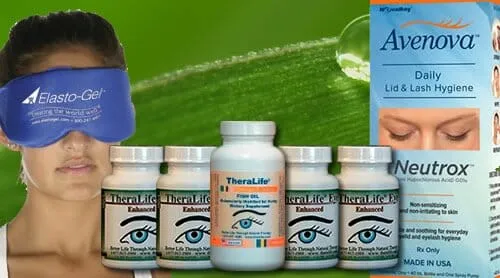
Inside-out supportTarget dry-eye inflammation, eyelid comfort, and meibomian gland health together.
Testimonial
I have been very pleased in my dealings with TheraLife over many years. Since I have followed their advice, my blepharitis, which flared up often before, has not come back. I also no longer suffer from dry eyes now that I have been steadily using TheraLife eye capsules for 4 years.
*Note: Results may vary.*
Call and talk to a doctor if TheraLife is right for you- 1-877-917-1989 US/Canada
The Complete Oral Solution for Blepharitis- When Drops Don't Work.
Treat Dry Eyes, Blepharitis and MGD For Complete Recovery
Restore your own tears from inside out –
- Sustainable,
- Long Lasting,
- All Natural.
Definition, types, and common causes
Definition
Blepharitis is eyelid inflammation. Typically affects both eyes along the edges of eyelids, causing eyelid swell and swollen eyelids.
Types
There are two types: anterior and posterior blepharitis.
- Anterior – blepharitis is inflammation mainly centered around the skin, eyelashes, and lash follicles. Anterior blepharitis has staphylococcal and seborrheic variants.
- Posterior blepharitis causes blocked oil gland (MGD), which involves the meibomian gland orifices, meibomian glands, tarsal plate, and blepharo-conjunctival junction. For more discussion, see below.
Causes
- Chronic dry eyes
- Acne rosacea. Rosacea causes facial skin inflammation, including eyelids.
- Allergies. Allergies to contact lens solution, eye drops, or eye makeup can spur irritation.
- Scalp dandruff (Seborrheic dermatitis). …
- Lice or mites in eyelashes (Demodex).
- Poor eyelid hygiene – including wearing eye makeup
- excessive oil produced by the glands in the eyelid
- Bacterial infection (often staphylococcal)
- Associated with certain skin conditions. See below
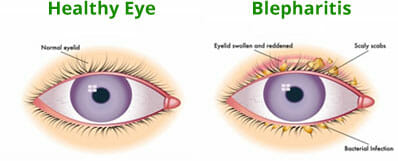
Blepharitis commonly affects both eyes along the eyelid edges.
Why does blepharitis keep on recurring?
The root cause is dry eye inflammation, which fuels the development of blepharitis. Recurrence is often a chronic condition that’s difficult to treat. Because the root cause is chronic dry eyes – where constant inflammation creates a vicious cycle of blepharitis, dry eyes, and MGD.
The condition most typically has a chronic course with intermittent exacerbations and eruptions of symptomatic disease.
The traditional blepharitis treatment may not sufficiently address the inflammatory dry eyes to eradicate blepharitis, including prescription eye drops.
Eye drops treat dry eyes from the surface. There is a limit on its ability to address the root cause of chronic dry eyes- low cellular metabolism caused by inflammation.
How TheraLife can help
Theralife developed an oral formula targeted to reduce inflammation, increase cellular activities, and restore normal functions to tear production. Increase tear volume, restore health to meibomian oil glands, reduce red, swollen, itchy eyelids, and restore vision.
Blepharitis Symptoms
Symptoms of blepharitis typically present with eye irritation, itching, red eyelids, flaking of the lid
margins, or changes in the eyelashes.
People complain of eyelids stuck in the morning due to crusty sticky build-up. Warm water can get the eyelids to open.
Other common symptoms of blepharitis include:
- Burning
- Blurred vision
- Misdirected eyelashes
- Watering
- Foreign body sensation
- Crusting on eyelashes
- Swollen Red eyelids
- Red eyes
- Photophobia – light sensitivity
- Pain
- Decreased vision
- Visual fluctuations
- Heat, cold, alcohol, and spicy-food intolerance
Explore the condition in more detail
Open each topic to review the original detailed information.
Associated skin conditions
Researches at the National Eye Institute found other skin diseases are prevalent in blepharitis.
Herpes skin disease can be associated with red and blister formation.
Seborrheic dermatitis has oily skin flaking from the scalp or brows.
Rosacea-Rosacea is associated with pimples, a red nose, spider veins of the cheeks and eyelid margins, erythema, and papules.
The skin condition can generate persistent inflammation to keep blepharitis and dry eyes in circles.
What do your eyes look like
Gross examination of the eyelids shows red and crusting of the eyelashes and lid margins.
Slit-lamp examination shows additional features:
- Loss of lashes (madarosis),
- Whitening of the lashes (poliosis),
- Lid scarring and misdirection of lashes (trichiasis),
- Crusting of the lashes and meibomian orifices,
- Eyelid margin ulceration,
- Plugging and “pouting” of the meibomian orifices,
- Telangiectasias of the lid margin,
- Lid irregularity (tylosis).
- The conjunctiva usually shows papillary injection. Advanced cases reveal tarsal thickening,
- Loss of normal tarsal vascular architecture,
- Subconjunctival substantia propria fibrosis,
- Conjunctival scarring
- Tarsal distortion due to cicatricial contraction and subsequent entropion.
Cornea Damage- Causing Eye Pain
- Epithelial erosions,
- Marginal infiltrates,
- Marginal ulcers,
- Limbal inflammation and thickening (limbitis) of the cornea.
- Peripheral corneal irregularities formation.
Corneal can progress to infection and even perforation. That is why your eyes hurt.
How bacterial infection damage eyelids
Blepharitis frequently involves bacterial colonization of the eyelids.
Seborrheic dermatitis and meibomian gland dysfunction have increased colonization of the lid margin. Which results in the direct microbial invasion of tissues, immune system-mediated damage, or damage caused by the production of bacterial toxins, waste products, and enzymes.
Prognosis
Overall, the prognosis for patients with blepharitis is good to excellent.
Blepharitis only causes significant morbidity in a tiny subset of patients.
For most, it remains more of an asymptomatic affliction than a genuine threat to their health and function.
Impact of chronic blepharitis on quality of life.
People with chronic blepharitis experience discomfort and misery that can significantly reduce their well-being and ability to carry out daily life and work activities.
Recognition of the off and on course of the disease, and the necessity of management through a prolonged program rather than an instant cure, help them successfully approach the condition.
Anterior blepharitis is associated with bacterial infections.
The anterior variant of blepharitis involves mainly the lashes and associated non-meibomian oil glands. Various formations of debris adhere to the lashes.
- Crusting refers to flakes of material that adhere to the lashes and usually represent seborrheic disease. The epithelial material is crusting.
- In staphylococcal diseases, a collarette is an irregular ringlike formation. Staphylococcal blepharitis has the appearance of collarettes on the lashes. A sleeve is a smooth tube of material that also surrounds the base of the lash as it intersects the lid. Sleeving is associated with infection by the eyelash parasite.
- Ulcers at the base the lashes.-covered by a crust of fibrin, which is lifted as the lash shaft grows.
- Seborrheic blepharitis also involves the anterior lid primarily. It is associated with greasy crusts of material adherent to the eyelash shaft.
Corneal disease is most familiar with the staphylococcal variant of anterior lid disease.
Posterior blepharitis associated with MGD
Posterior blepharitis is principally related to the glands in your eyelids.
Alterations in secretory metabolism and function lead to disease. The oily debris becomes more waxlike and begins to block the gland orifices. The stagnant material becomes a growth medium for bacteria and can seep into the deeper eyelid tissue layers, causing inflammation.
The inflammation leads to gland plugging, hardening of the lipid secretory material, inflamed orifices, and the formation of chalazia.
Complications
Conjunctivitis
Chronic pink eyes are common. It can result in a complication of blepharitis and require additional treatment besides eyelid margin therapy.
Antibiotics
Antibiotic-corticosteroid solutions can significantly reduce inflammation and symptoms of
conjunctivitis. Corneal infiltrates are with antibiotic-corticosteroid drops.
Eye ulcers
Small marginal ulcers are treated empirically. Larger, paracentral, or atypical ulcers should be scraped, and specimens sent for diagnostic slides and culture and sensitivity testing.
Steroids
The use of steroids can lead to cataracts, glaucoma, and viral reactivations.
Eyelid Disorder
Recurrent bouts of inflammation and scarring from blepharitis can promote positional eyelid disease. Trichiasis and lid notching can result in keratitis and severe symptoms. These conditions often are very refractory to simple management steps.
Entropion or ectropion
Eyelids ingrown or outgrown can develop and complicate the clinical situation.
Other Blepharitis Remedies

Eyelid Detergent Cleanser
Strips away your eyes natural lubricants making eyelids sore and dry. Also allows bacteria and mites to re-attach to eyelids after cleaning.
HypoChlor Cleanser
This natural cleanser contains hypochlorous acid: it disrupts the biofilm layer where bacteria and mites like to anchor, preventing re-attachment
- Contains ingredients that your own body already produces
Steroid Eye Drops
Strips away your eyes natural lubricants making eyelids sore and dry. Also allows bacteria and mites to re-attach to eyelids after cleaning.
TheraLife Eye Capsules
Clinically-proven ingredients that restore your eyes natural tear secretion functions to stop the dry eye cycle. This is a better and healthier long-term solution to treating dry eyes, over time you should not have to use eye drops.
Moisturizing Eye Drops
Frequent use makes eyes drier and drier because your eyes stop producing natural tears
Fish Oil
Has been known to fight inflammation and thicken tears
Hot Wash Cloth
Loses heat over time
Hot Compress
Stays warm for 20 minutes. You need this prolonged heat to unclog the meibomian glands, allow lubricants, thicken tears for long lasting relief.
Take the next step toward lasting eyelid comfort
Explore the complete starter kit or speak with the TheraLife team.