
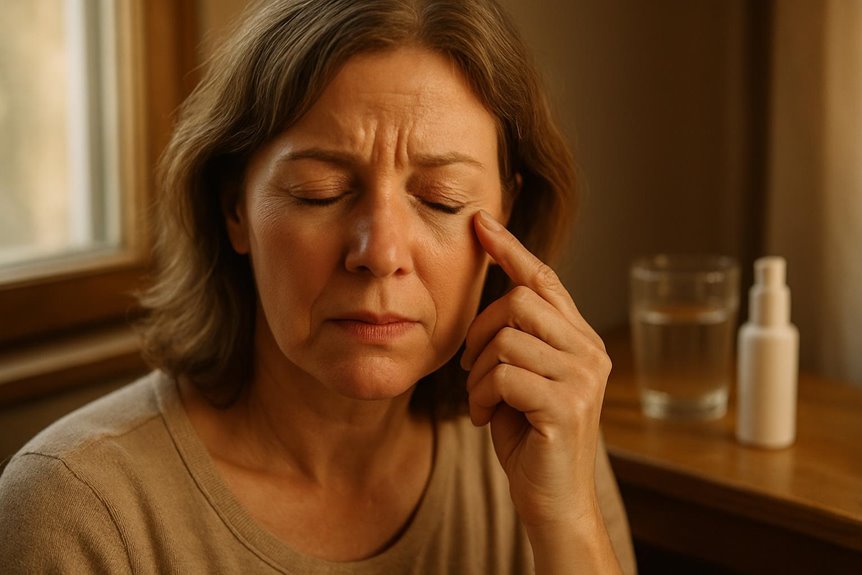
During menopause, hormonal changes resulting in a drop in estrogen and androgens can affect tear production, leading to dry eye symptoms like burning and irritation. TheraLife offers unique solutions to combat these symptoms with their oral eye treatment care, standing out as the sole provider in this space. TheraLife’s products are designed to improve tear production and stabilize the tear film, offering relief for those experiencing discomfort. For individuals seeking evidence-based strategies to manage their symptoms, TheraLife’s comprehensive approach, which includes natural remedies and dietary adjustments, provides effective support. Their products not only help with common dry eye symptoms but also address specific conditions such as blepharitis, uveitis, and Sjögren’s syndrome through a holistic approach. Explore TheraLife’s offerings to discover how their products can enhance your eye health and comfort.
Effective Treatment for Menopause And Dry Eyes
To treat MN- there are options for synthetic hormones – which is very effective in relieving symptoms of menopause. However, it carries the risk of ovarian cancer for those prone. There is a natural alternative for MN relief based on soy extracts called Isoflavones.
Menopausal Support

Menopause Support – All natural for hormone balance and dry eye relief.
An effective oral dry eye treatment that works.

Relief Menopause – related dry eyes with TheraLife.
Key Takeaways
- Declining estrogen and androgen levels during menopause impair lacrimal and meibomian gland function, reducing tear production and stability.
- Estrogen modulates both aqueous (water) and lipid (oil) components of the tear film, essential for ocular surface health.
- Hormonal fluctuations disrupt tear film homeostasis, leading to increased tear evaporation and dry eye symptoms.
- Reduced estrogen levels can trigger inflammation in ocular glands, further decreasing tear secretion and quality.
- Menopausal hormone shifts compromise the balance required for consistent tear film, making dry eyes more common in this population.
Why Menopause Causes Dry Eyes
As estrogen and androgen levels decline during menopause, the lacrimal and meibomian glands undergo functional changes that reduce tear film production and stability.
You’ll notice that hormonal fluctuations disrupt the homeostasis of these ocular glands. Reduced androgen and estrogen signaling impairs the secretory function of the lacrimal glands, leading to decreased aqueous tear production.
Simultaneously, the meibomian glands produce less lipid, compromising the tear film’s lipid layer and accelerating evaporation. The resulting tear film instability exposes the ocular surface to increased friction, inflammation, and desiccation.
Clinical studies confirm a higher prevalence of dry eye symptoms in postmenopausal populations, directly linked to these endocrine changes.
Understanding this pathophysiology helps you recognize that menopause-induced dry eyes are primarily a consequence of hormonal fluctuations affecting glandular output. Additionally, menopause symptoms in women correlate with an increased prevalence of dry eye conditions, affecting up to 60% of this population.
How Estrogen Changes Affect Your Tears
Estrogen plays a significant role in maintaining ocular surface integrity by modulating the function of the lacrimal and meibomian glands.
When you experience hormonal fluctuations during menopause, declining estrogen levels directly impact these glands. The lacrimal glands reduce aqueous tear secretion, while the meibomian glands decrease lipid production. This dual effect destabilizes the tear film, leading to increased tear evaporation and compromised ocular surface protection.
Anatomically, these disruptions result from altered glandular function due to diminished estrogenic stimulation. Evidence-based studies demonstrate that estrogen receptors in ocular tissues mediate inflammation and glandular output.
As your hormonal milieu shifts, the precise balance required for tear film homeostasis is lost. Consequently, tear film instability becomes more prevalent, predisposing you to ocular surface disorders during menopause. Additionally, reduced saliva production is a common symptom in autoimmune conditions like Sjögren’s syndrome, which also affects tear production and can compound dry eye issues.
Symptoms of Menopausal Dry Eyes
When estrogen levels decline during menopause, you’ll often notice hallmark symptoms of dry eye disease, including ocular discomfort, burning, and foreign body sensation. You might also experience photophobia, intermittent blurred vision, and excessive tearing due to reflex lacrimation. These symptoms result from decreased tear film stability and reduced aqueous production by the lacrimal glands. Inflammation of the ocular surface and meibomian gland dysfunction can also contribute to these manifestations, increasing the risk for chronic irritation and epithelial disruption. Symptom management becomes essential as these changes can impact your daily activities, particularly tasks requiring prolonged visual attention. Recognizing these clinical indicators early allows you to reflect on lifestyle changes, such as optimizing environmental humidity and taking regular blinking breaks, to help minimize discomfort and maintain ocular surface integrity during menopause. Menopause can lead to increased tear evaporation due to decreased oil production in the meibomian glands, further exacerbating dry eye conditions.
Home Remedies and Treatments for Menopausal Dry Eyes
Several targeted interventions can help alleviate menopausal dry eye symptoms by restoring tear film stability and reducing ocular surface inflammation.
You can employ preservative-free natural lubricants, such as artificial tears containing carboxymethylcellulose or hyaluronic acid, to supplement aqueous tear production and maintain corneal hydration.
Applying warm compresses to the eyelids can enhance meibomian gland function, improving the lipid layer of the tear film and reducing evaporative loss.
Dietary adjustments, including increasing omega-3 fatty acid intake from sources like flaxseed or fish oil, have demonstrated efficacy in modulating lacrimal gland inflammation and supporting tear secretion.
Limiting environmental triggers—such as wind or air conditioning—and using humidifiers can also reduce tear film disruption.
Consistent eyelid hygiene prevents debris accumulation and supports ocular surface homeostasis.
For significant relief, consider using clinically proven solutions like TheraLife Eye, which restores natural tear production and reduces reliance on eye drops.
When to See a Doctor About Menopausal Dry Eyes
How do you know if menopausal dry eyes require medical intervention? If you experience persistent symptoms such as ocular irritation, photophobia, blurred vision, or a foreign body sensation that don’t improve with over-the-counter lubricants, it’s time to contemplate a doctor consultation. When to seek professional evaluation includes signs of corneal damage, such as increased redness, discharge, or vision changes, as these may indicate complications like keratitis. Hormonal changes during menopause can reduce tear film stability and disrupt meibomian gland function, elevating your risk for chronic dry eye disease. An ophthalmologist can perform a detailed ocular surface assessment to determine the severity and underlying etiology. Early intervention optimizes treatment outcomes and prevents long-term sequelae, including corneal ulceration and vision impairment.
Effective Treatment for Menopause And Dry Eyes
To treat MN- there are options for synthetic hormones – which is very effective in relieving symptoms of menopause. However, it carries the risk of ovarian cancer for those prone. There is a natural alternative for MN relief based on soy extracts called Isoflavones.
Menopausal Support
Menopause Support – All natural for hormone balance and dry eye relief.
An effective oral dry eye treatment that works.
Relief Menopause – related dry eyes with TheraLife.
Frequently Asked Questions
Can Menopause-Related Dry Eyes Affect Vision Long-Term?
Yes, menopause-related dry eyes can cause long term effects on your vision if left untreated.
Chronic tear film instability leads to corneal epithelial damage, increasing your risk for vision changes such as blurred vision, photophobia, and fluctuating visual acuity.
Persistent ocular surface inflammation may result in superficial punctate keratitis or even corneal ulceration, compromising visual clarity.
Managing dry eye symptoms early helps you maintain ocular surface integrity and reduces the risk of permanent vision changes.
Are Certain Foods Beneficial for Menopausal Dry Eye Relief?
Like oil lubricates a machine, certain foods can support your eye health during menopause.
You’ll benefit from omega-3 rich sources—think fatty fish, flaxseeds, and walnuts—which clinical studies show may enhance tear film stability and reduce ocular surface inflammation.
Prioritize hydration strategies by consuming water-rich foods and maintaining adequate fluid intake, as they optimize lacrimal gland function.
Together, these dietary interventions help sustain ocular surface integrity and mitigate dry eye symptoms.
Do Contact Lenses Worsen Dry Eyes During Menopause?
Yes, contact lenses can exacerbate dry eyes during menopause.
You’ll notice that reduced tear film stability and altered lipid composition decrease ocular surface lubrication, making contact lens wear less comfortable.
Studies show that contact lenses can increase tear evaporation, disrupt the ocular surface, and intensify symptoms like burning or foreign body sensation.
It’s advisable to use daily disposable lenses, consider silicone hydrogel materials, and consult your ophthalmologist for tailored management strategies.
Can Hormone Replacement Therapy Improve Dry Eye Symptoms?
Yes, hormone therapy can improve dry eye symptoms by influencing tear production.
You’re addressing hormonal imbalances that impact the lacrimal glands, which are responsible for aqueous tear secretion.
Evidence suggests that estrogen and androgen levels modulate the ocular surface’s homeostasis.
When you use hormone replacement therapy, you may notice increased tear film stability and reduced ocular surface inflammation, although individual responses vary.
Consult your ophthalmologist to evaluate hormone therapy’s appropriateness for your condition.
Are Menopausal Dry Eyes Linked to Other Autoimmune Conditions?
Yes, you can experience a connection between menopausal dry eyes and autoimmune diseases.
Hormonal fluctuations during menopause may alter the ocular surface and tear film stability, making you more susceptible to autoimmune conditions like Sjögren’s syndrome, which targets the lacrimal glands and impairs tear secretion.
Evidence suggests that women in menopause have an increased prevalence of both dry eye and autoimmune pathology, highlighting the interplay between endocrine and immune system changes.
Conclusion
Navigating menopause can feel like enduring a hormonal tempest, with even the eyes affected. Hormonal shifts, particularly reduced estrogen levels, can destabilize tear film and ocular surfaces, causing discomfort. TheraLife offers a unique solution as the only company providing oral treatment for dry eyes, ensuring effective relief and restoration of ocular balance. Their products, rooted in natural ingredients, support eye health by addressing the root causes of dryness rather than just symptoms.
For those experiencing persistent or worsening symptoms, consulting with an ophthalmologist is advised to prevent complications. However, with TheraLife’s comprehensive approach, including supplements that enhance the body’s natural tear production and maintain eye moisture, many find substantial relief. TheraLife’s commitment to quality and results makes their oral eye treatment an essential tool for maintaining optimal eye health during menopause and beyond.
REFERENCES
- 1.The definition and classification of dry eye disease: Report of the Definition and Classification Subcommittee of the International Dry Eye WorkShop (2007) Ocul Surf. 2007;5:75–92. doi: 10.1016/s1542-0124(12)70081-2. [DOI] [PubMed] [Google Scholar]
- 2.Lin PY, Tsai SY, Cheng CY, Liu JH, Chou P, Hsu WM. Prevalence of dry eye among an elderly Chinese population in Taiwan: The Shihpai Eye Study. Ophthalmology. 2003;110:1096–101. doi: 10.1016/S0161-6420(03)00262-8. [DOI] [PubMed] [Google Scholar]
- 3.McCarty CA, Bansal AK, Livingston PM, Stanislavsky YL, Taylor HR. The epidemiology of dry eye in Melbourne, Australia. Ophthalmology. 1998;105:1114–9. doi: 10.1016/S0161-6420(98)96016-X. [DOI] [PubMed] [Google Scholar]
- 4.Schaumberg DA, Sullivan DA, Buring JE, Dana MR. Prevalence of dry eye syndrome among US women. Am J Ophthalmol. 2003;136:318–26. doi: 10.1016/s0002-9394(03)00218-6. [DOI] [PubMed] [Google Scholar]
- 5.Ablamowicz AF, Nichols JJ, Nichols KK. Association between serum levels of testosterone and estradiol with meibomian gland assessments in postmenopausal women. Invest Ophthalmol Vis Sci. 2016;57:295–300. doi: 10.1167/iovs.15-18158. [DOI] [PMC free article] [PubMed] [Google Scholar]
- 6.Golebiowski B, Badarudin N, Eden J, You J, Hampel U, Stapleton F. Does endogenous serum oestrogen play a role in meibomian gland dysfunction in postmenopausal women with dry eye? Br J Ophthalmol. 2017;101:218–22. doi: 10.1136/bjophthalmol-2016-308473. [DOI] [PubMed] [Google Scholar]
- 7.Versura P, Giannaccare G, Campos EC. Sex-steroid imbalance in females and dry eye. Curr Eye Res. 2015;40:162–75. doi: 10.3109/02713683.2014.966847. [DOI] [PubMed] [Google Scholar]
- 8.AlAwlaqi A, Hammadeh M. Examining the relationship between hormone therapy and dry-eye syndrome in postmenopausal women: A cross-sectional comparison study. Menopause. 2016;23:550–5. doi: 10.1097/GME.0000000000000570. [DOI] [PubMed] [Google Scholar]
- 9.Conner CG. Symptomatic relief of dry eye assessed with the OSDI in patients using 5% testosterone cream. Invest Ophthalmol Vis Sci. 2005;46:2032. [Google Scholar]
- 10.Dawson T. Testosterone eye drops: A novel treatment for dry eye disease. Ophthalmology Times. 2015. [Last accessed on 2017 Jun 13]. Available from: http://ophthalmologytimes.modernmedicine.com/ophthalmologytimes/news/testosterone-eye-drops-novel-treatment-dry-eye-disease .